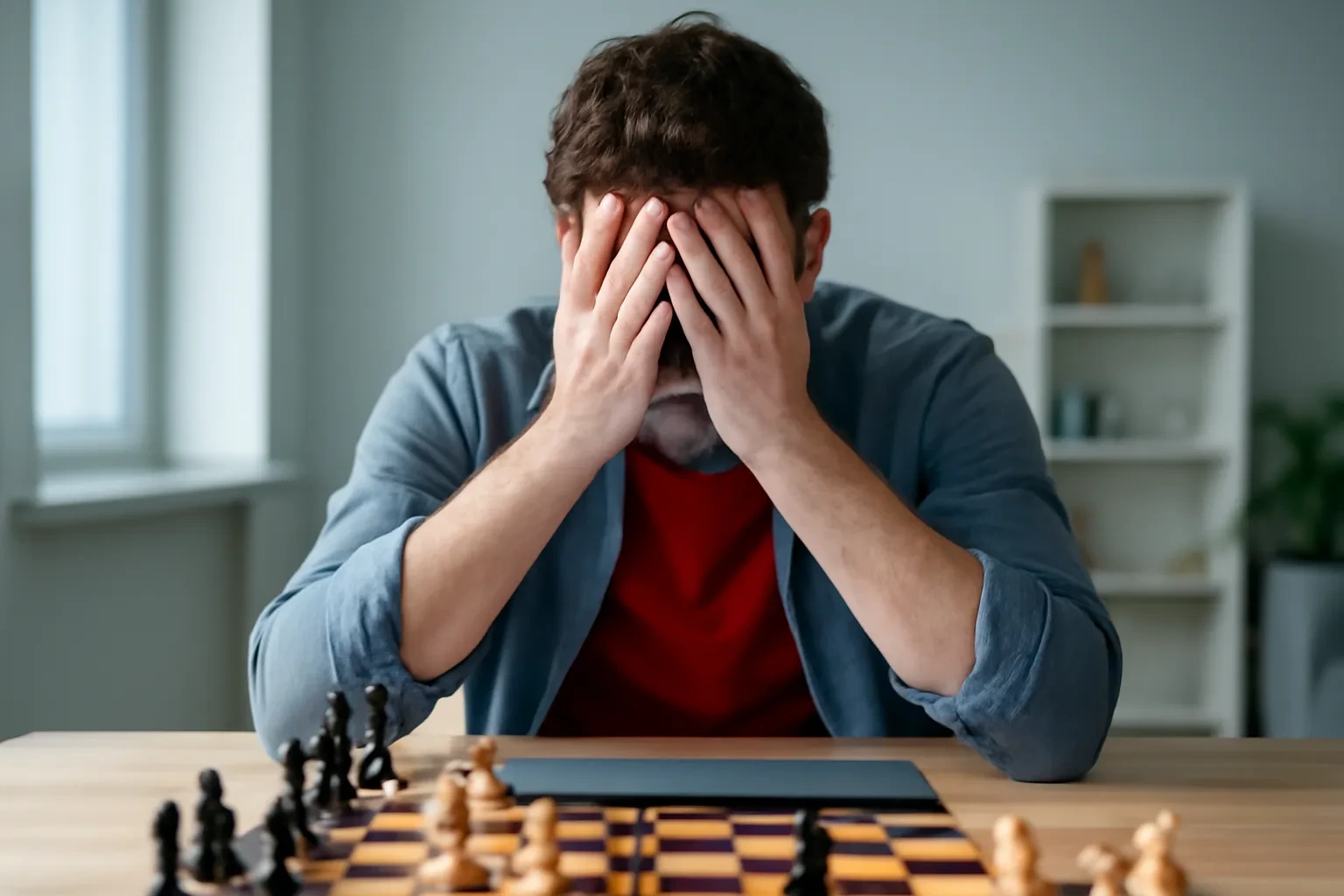
You lose a game you were winning. Annoyed, you click "new game" immediately. You lose again, faster. Now you're angry, and the next game is over in two minutes. An hour later, you've lost ten games and a big chunk of rating, and you don't remember a single move.
That is tilt: a frustrated, emotional state where each loss makes the next one more likely. It's one of the most common reasons online players' ratings swing wildly, and one of the most fixable. This article explains why tilt happens, the warning signs, stop rules that work, and how to reset.
Why tilt happens
- Losses hurt more than wins feel good. A painful loss creates a strong urge to "fix" it right away.
- The next game is one click away. Online chess has no natural pause between games.
- Frustration narrows your thinking. Angry players play faster, check less, and take unnecessary risks.
- Rating feels like a score to win back. Chasing lost points leads to even more rushed games.
- Fast time controls amplify everything. In blitz and bullet, there's no time to calm down during the game. See should you play blitz.
Warning signs
Learn to notice these while they're happening:
- You click "new game" within seconds of losing.
- You're playing faster than usual and not checking threats.
- You feel angry at your opponent, the site, or yourself.
- You're thinking about rating points more than moves.
- You're telling yourself "just one more to win it back."
- You're playing later than you planned.
One sign alone is normal. Two or three together mean you're tilting.
Stop rules that work
The most reliable defense is a rule decided before you start playing, when you're calm:
- Two or three losses in a row: stop. Take at least fifteen minutes away from the screen.
- A fixed number of games per session, for example five, regardless of results.
- No playing after a certain time of night.
- No playing when already upset about something else.
Rules decided in advance work better than decisions made in the moment, because in the moment you're the one who's tilted.
How to reset
When you stop, use the break well:
- Stand up and move. Walk, stretch, get water.
- Don't review the painful game immediately. Emotions are too fresh.
- Do something unrelated for a while.
- When calm, look at one game, not all of them. Pick the most instructive loss and find one lesson. See how to analyze your games.
- Start the next session with something easy, like a few puzzles or a slower game.
Preventing tilt before it starts
- Play slower time controls when your goal is improvement. They give you time to think and calm down within the game.
- Hide your rating during play if the site allows it. Many players feel less pressure without the number in front of them.
- Set a process goal instead of a result goal: "Check for threats every move" rather than "Win three games."
- Play when rested, not when tired, hungry, or stressed.
- Remember variance. Even strong players lose streaks of games. A few losses don't mean you've gotten worse.
Dealing with rude opponents
Tilt is sometimes triggered by opponents who taunt, stall, or chat rudely.
- Turn off chat if it bothers you.
- Block and report abusive players.
- Don't retaliate. It rarely helps and often makes things worse.
See playing chess online safely and fair play and cheating.
What to do after a tilted session
Everyone has a bad session sometimes. Afterward:
- Don't punish yourself. It's a normal part of playing.
- Note what triggered it: a specific loss, fatigue, a rude opponent.
- Adjust your stop rules if needed.
- Remember that rating recovers. One bad evening rarely matters over months.
Tilt and improvement
Tilt doesn't just cost rating points. It also trains bad habits: fast, careless moves, no blunder checks, no review. The more time you spend tilted, the more those habits spread into your normal games. Controlling tilt is part of improving. See breaking a rating plateau.
Common mistakes
Playing "one more" after a bad loss. The classic trigger.
Chasing rating. Focusing on points instead of moves.
Reviewing painful games immediately. Adds frustration without adding learning.
Playing tired. Late-night sessions are where tilt thrives.
Blaming the opponent or the site. It shifts attention away from what you can control.
A short pre-session routine
Tilt is easier to prevent than to stop. A simple routine before each session helps:
- Check your state: are you rested, fed, and calm? If not, choose puzzles instead of rated games.
- Set your limit: decide how many games you'll play and your stop rule.
- Warm up: solve a few easy puzzles to get your brain into chess mode.
- Pick your time control deliberately: slower if you want to learn, faster only for fun.
It takes two minutes and removes many of the conditions that lead to tilt.
What winning streaks teach
Tilt doesn't only come from losses. After a winning streak, some players become overconfident, play faster, and take unnecessary risks. The result is often a sudden string of losses that feels even worse. Treat winning streaks with the same calm as losing ones: stick to your routine, keep checking threats, and stop at your planned limit even when things are going well.
Talking about it
If you play with friends or at a club, talk about tilt openly. Many players are relieved to hear that others struggle with the same thing. Sharing stop rules and holding each other to them can make a real difference.
Frequently asked questions
What is tilt in chess?
A frustrated emotional state where losses lead to rushed, careless play, which leads to more losses.
How do I stop tilting?
Set stop rules in advance, like stopping after two or three losses in a row, and take a real break away from the screen.
Should I review games while tilted?
Better to wait until you're calm. Then review one game and find one lesson.
Does hiding my rating help?
For many players, yes. It reduces pressure and helps them focus on moves.
Is it normal to have losing streaks?
Yes. Everyone has them. What matters is not letting a streak turn into a tilted session. More online play tips are in the online chess section.
How long should a break be after tilting?
At least fifteen minutes away from the screen, and often the rest of the day is better. The goal is to return only when you feel genuinely calm and curious about chess again, not just eager to win back points.