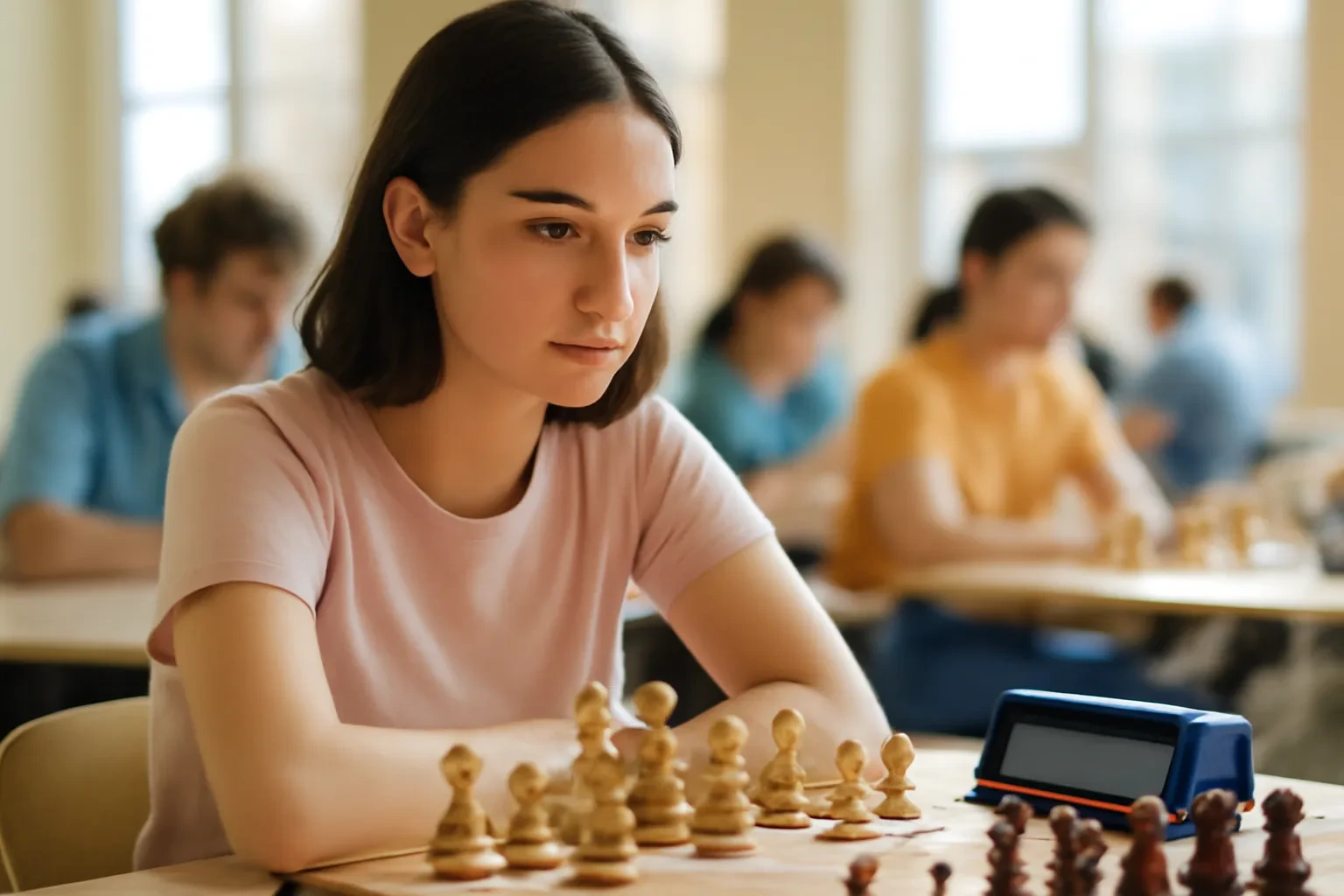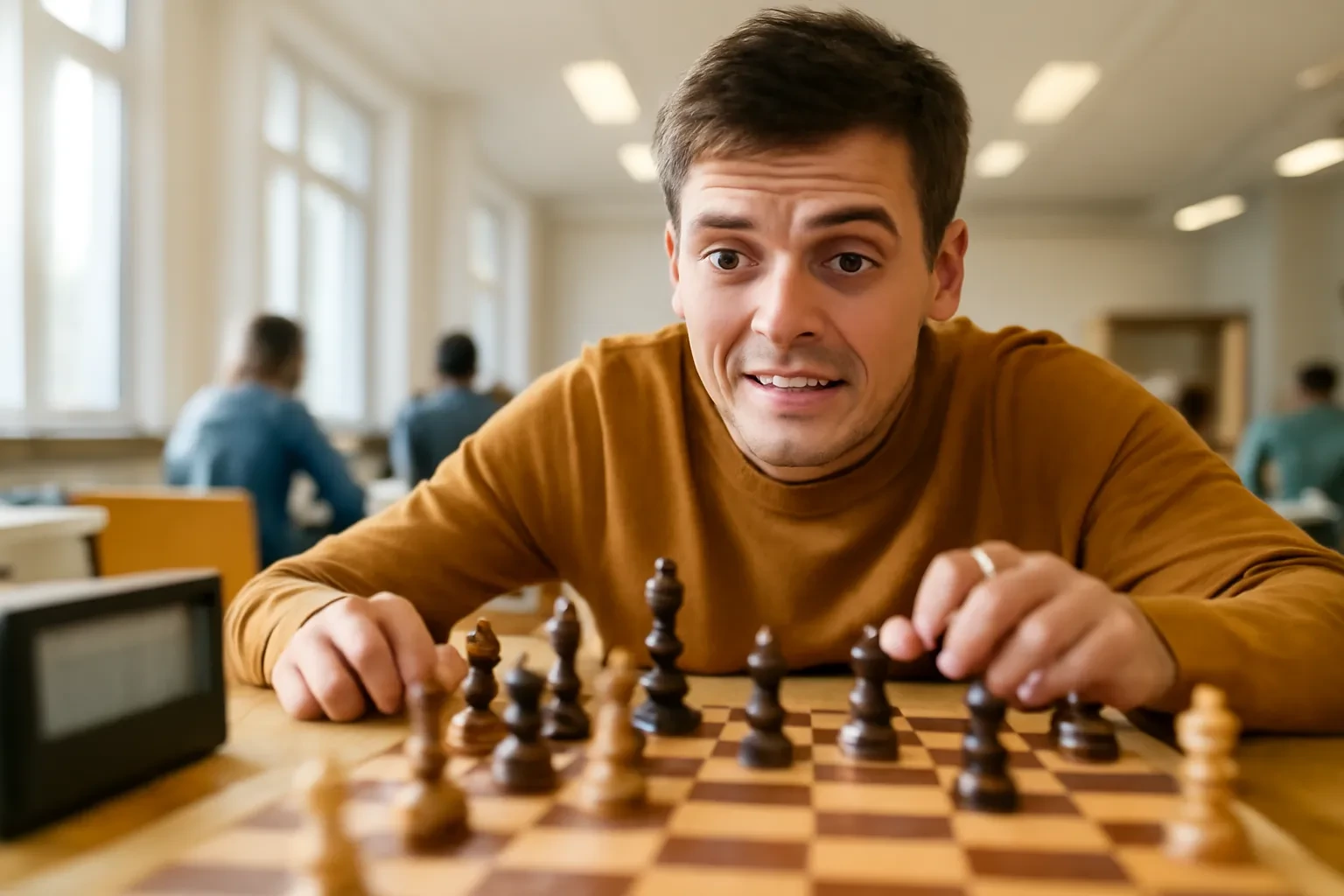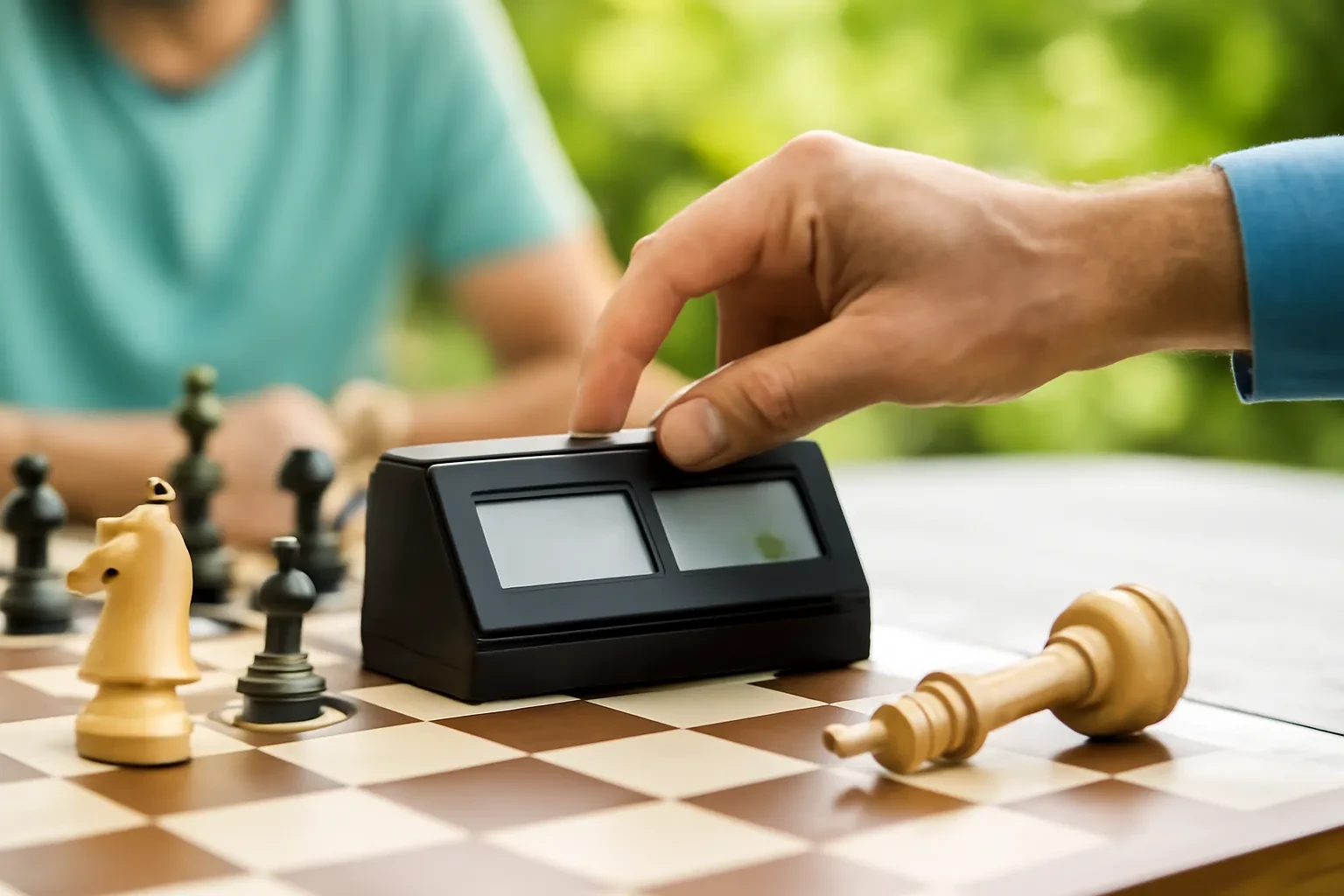
Blitz chess, usually three to five minutes per player, is the most popular way to play online. It is exciting, it fits into a coffee break, and every game gives an immediate result. For many players, it is the main way they play chess at all.
But if you want to get better, you have probably wondered: is blitz helping me or holding me back? The honest answer is "both," depending on how you use it. This article explains what blitz trains well, what it tends to damage, the signs that you are overdoing it, and a practical mix of fast and slow games.
For an overview of the different formats, see bullet, blitz, rapid, and classical.
What blitz is good for
- Pattern recognition. Seeing many positions quickly helps you absorb common tactical patterns and typical piece placements.
- Opening familiarity. Blitz is a good way to get your chosen openings "into your hands": you see the same first moves over and over.
- Practical decision-making. Blitz forces you to make reasonable choices without perfect calculation, which is a real skill in any format.
- Time management under pressure. Short time controls teach you to avoid spending half your clock on one move.
- Fun. Enjoyment keeps you playing chess for years. That matters.
What blitz tends to damage
- Calculation depth. In blitz, you rarely calculate more than a couple of moves. If that becomes your only mode, you lose the habit of deep calculation.
- Blunder-checking discipline. The "is anything hanging?" routine is often skipped in fast games. Skipping it repeatedly can make it disappear from your slow games too.
- Learning from mistakes. Blitz games pile up quickly. Most players never review them, so the same mistakes repeat.
- Emotional control. Fast losses sting, and the next game is one click away. That leads to tilt: playing angrily, worse and worse.
Signs you are playing too much blitz
- Your rating in blitz is going up, but your results in slower games are not.
- You play dozens of games in a session and remember almost none of them.
- You often feel frustrated or angry after playing.
- You make the same kind of blunder again and again.
- You cannot sit through a 15-minute game without getting impatient.
If several of these sound familiar, it is time to rebalance.
Who benefits most from blitz
- Players with a solid foundation who already avoid basic blunders in slow games.
- Players preparing openings, who want repetition.
- Anyone playing purely for fun, with no particular improvement goal.
Who should limit blitz
- Beginners who are still building the habit of checking for threats. Slow games give them time to practice that habit. See common beginner mistakes.
- Players stuck on a plateau in slower formats. Too much blitz may be part of the reason. See breaking a rating plateau.
A healthy mix
Here is a weekly mix that works for many improving players:
| Activity | How often |
|---|---|
| Slow games (15+10 or longer), each reviewed | 3 per week |
| Tactics puzzles | 15 minutes, most days |
| Blitz, for fun or opening practice | A few games, 2–3 sessions per week |
| Endgame study | Once a week |
The key idea: slow games are for learning, blitz is for practice and fun.
How to make blitz more useful
- Use increment. 3+2 or 5+3 gives you a small buffer and reduces pure clock-flagging. See what is increment.
- Set a limit. Decide before you start: five games, then stop.
- Stop after two or three losses in a row. Take a break. Tilt is real.
- Review one blitz game per session. Pick the most interesting one and spend five minutes on it.
- Practice one opening per session. Use blitz deliberately to rehearse your repertoire.
Blitz and ratings
Blitz ratings move fast. A good session can add many points, a bad one can take them away just as quickly. Do not read too much into short-term changes. If you care about ratings as a measure of improvement, watch your slower-format rating over months instead. See online ratings explained.
Common mistakes
Playing blitz when tired. Late-night blitz sessions are where many rating points go to die.
Chasing losses. "One more to win it back" often turns into ten more.
Using blitz as your only chess. You will stay fast, but you might not get stronger.
Never reviewing. A blitz game you never look at is only entertainment.
Blitz and the "one more game" trap
Almost every blitz player knows the feeling: you lose a game, feel sure you should have won, and click "new game" immediately. You lose again, more frustrated. After an hour, you have played twenty games and lost more rating than you started the session with.
This is not a lack of discipline in some abstract sense. Fast games are designed to be quick and rewarding, and losses create a strong urge to "fix" the result right away. The most reliable defense is a rule set before you start:
- A fixed number of games per session.
- A stop rule after two or three losses in a row.
- No blitz when tired, hungry, or upset about something else.
Writing these rules down sounds silly, but many players find it is the only thing that works.
Blitz as a warm-up
Blitz has one more useful role: warming up before a slower game or tournament round. A couple of relaxed blitz games can get your brain into "chess mode." Just keep it short and do not let the result affect your mood before the serious game.
Mixing formats over a season
If you play in over-the-board tournaments, consider a simple rhythm: in the weeks before an event, play mostly slow games and puzzles; after the event, allow yourself more blitz for fun. Adjusting the mix around your goals is more useful than following one fixed rule all year.
Frequently asked questions
Is blitz bad for improvement?
Not by itself. It is useful for pattern recognition and opening practice. Problems arise when it replaces slow games and review entirely.
Should beginners play blitz?
A little, for fun. But most of a beginner's games should be slower, to build good thinking habits.
How many blitz games per day is reasonable?
It depends on your goals, but setting a fixed limit before you start, such as five games, helps prevent tilt.
Does blitz improve calculation?
Not much. It improves intuition and speed, but deep calculation is trained better in slower games and puzzles.
What is a good blitz time control for learning?
Formats with increment, such as 3+2 or 5+3, give a little breathing room and reward good play more than fast clicking.