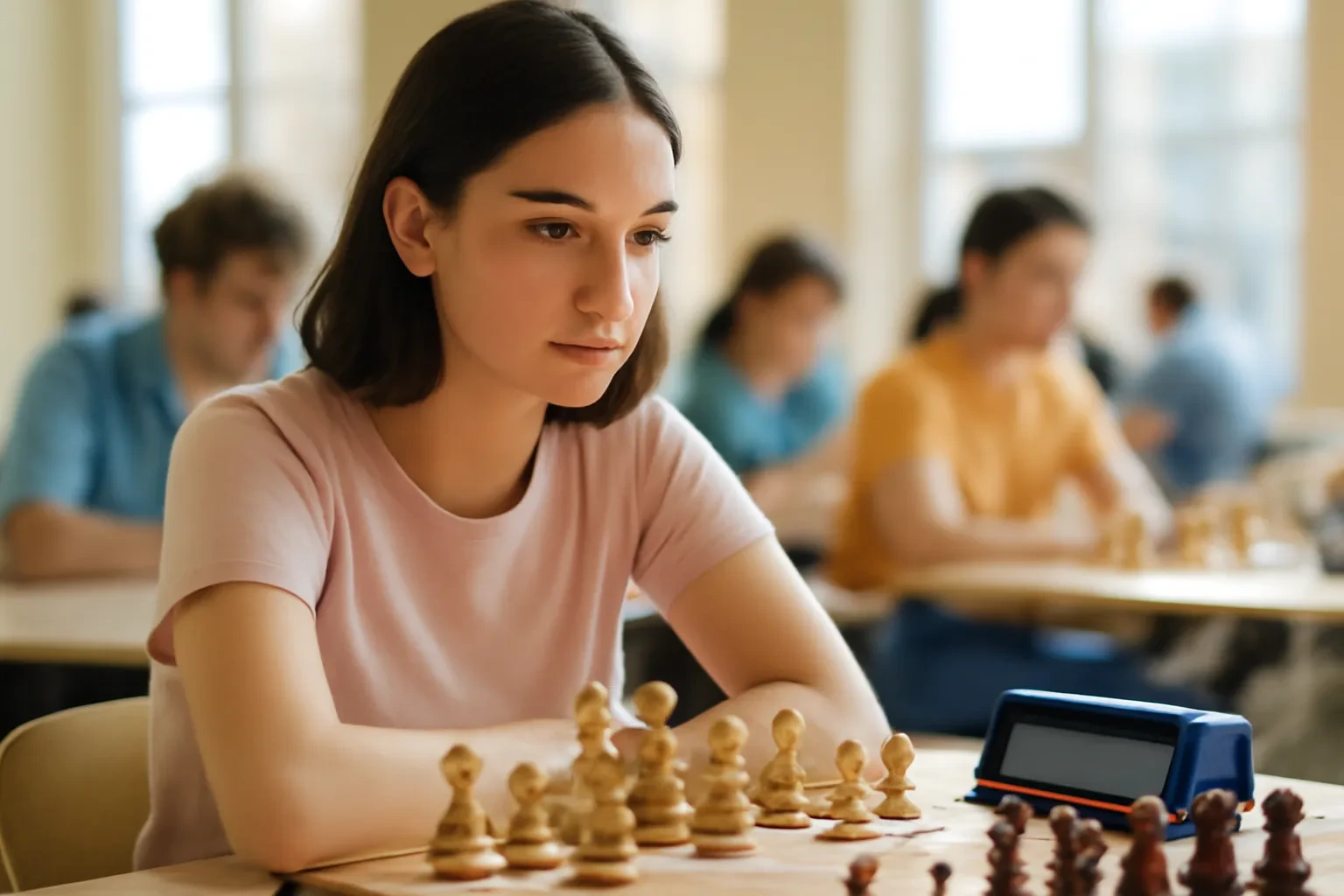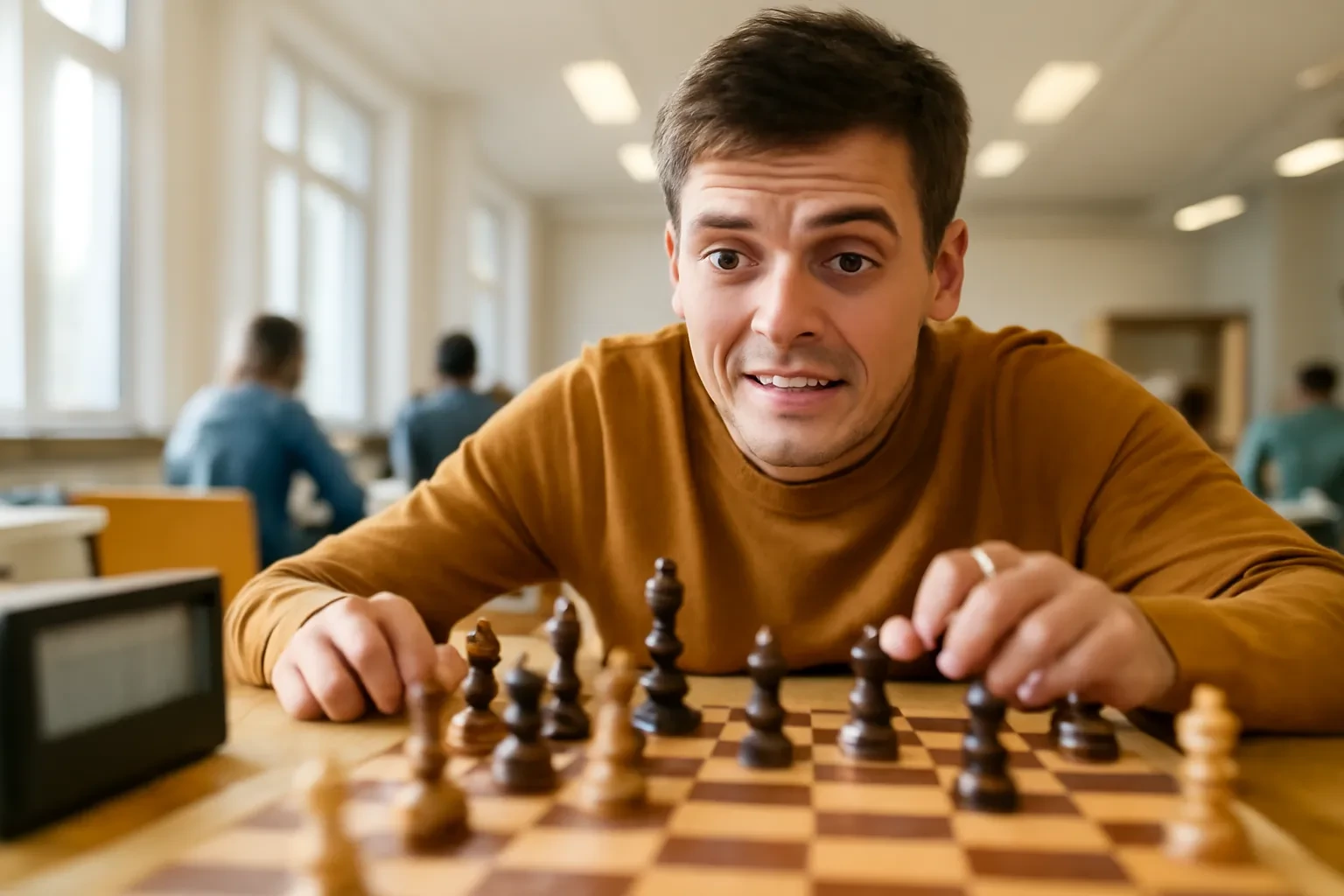
Every chess player knows the feeling. The position is good, maybe winning — and the clock says 0:14. Your heart rate jumps, your hand shakes, and moves you'd never play with time on the clock suddenly seem reasonable. A few seconds later, the advantage is gone.
Time trouble is its own skill. This guide covers how to survive the last minute, the classic mistakes people make under pressure, and — most importantly — how to stop getting into time trouble in the first place.
Surviving the last minute
Switch to "safety mode"
With little time, you can't calculate deeply. Change your goal from finding the best move to not blundering. Before each move, run a two-second check:
- Does my move hang anything?
- Does my opponent have a check or capture that wins material?
That's it. Everything else can wait.
Simplify
Trade pieces when you can. Fewer pieces mean fewer tactics, and fewer tactics mean fewer ways to blunder. If you're ahead, simplifying is doubly good.
Use the increment
If the game has increment, move faster than the increment in simple positions to rebuild your clock. With a two-second increment, a one-second move gains you a second. See what is increment.
Keep your pieces safe and your king safer
Put pieces on defended squares. Keep your king away from checks. Don't start new adventures.
Don't look at the clock every move
Checking the clock constantly costs time and raises panic. Glance occasionally; otherwise, focus on the board.
The classic time-trouble blunders
Moving the piece you just thought about. You considered a move, rejected it, then played it anyway because your hand was already moving. Decide, then move.
Forgetting the opponent's last move. Under pressure, players respond to the position as it was two moves ago. Always look at what just changed.
Walking into checks. A king move that allows a check with a fork is one of the most common time-trouble losses.
Premoving in a non-forced position (online). Saves a second, loses a queen.
Playing on autopilot in a won position. Winning positions still need care. A moment's inattention can throw away a whole game.
When your opponent is in time trouble
- Keep the position complicated — but only in ways that are safe for you.
- Move reasonably quickly so they don't get to think on your time.
- Avoid simplifying into an easy endgame where they can play by instinct.
- Stay objective. Don't make a bad move just because they're short of time.
Why you get into time trouble
Almost everyone who regularly runs short of time does it for one of a few reasons:
- Spending too long in the opening, especially on moves you've played many times.
- Perfectionism: searching for the "best" move when a good one is enough.
- Indecision: going back and forth between two moves you've already evaluated.
- Not using the opponent's time to think about general plans.
- Calculating the same line twice because you didn't trust your first calculation.
Habits that prevent time trouble
Set checkpoints
A simple rule: by move 20, you should have about half your starting time left. If you're well below that, speed up immediately. Our time management tips include more detailed budgets.
Spend time where it matters
Think longer when:
- There are tactics in the air.
- You're about to make a big exchange or enter an endgame.
- The position has just changed sharply.
Move faster when:
- The move is forced (recaptures, escaping check).
- You're in a familiar opening.
- The position is quiet and your plan is clear.
Decide and commit
Once you've compared two candidate moves, pick one. If you find yourself re-checking the same lines, choose the safer option and move on.
Play slower games to train
Ironically, the best way to get better at fast chess is to play enough slow games that good habits become automatic. Try 10+5 or longer on our play page. For the differences between time controls, see bullet, blitz, rapid and classical.
A 60-second survival checklist
When the clock drops under a minute, run this checklist on every move:
- What did my opponent just do? Look at the piece that moved.
- Are any of my pieces hanging?
- Does my opponent have a check that wins something?
- Is there a simple trade I can make?
- Move.
It sounds too simple to help, but the vast majority of time-trouble losses come from skipping step one or two. Practise this checklist in fast games until it runs on its own.
Practising time trouble on purpose
You can train for time trouble instead of just suffering it. Occasionally play games against the computer with a deliberately short clock, like 3+2, and focus only on safe, reasonable moves. The goal isn't to win; it's to get comfortable making decisions quickly without panicking. The skills transfer directly to the end of your slower games.
After the game
When you review a game where you got into time trouble:
- Find the move where you spent the most time. Was it worth it?
- Find the first move you played too fast. Was it a mistake?
- Note which phase of the game ate your clock.
After a few games, the pattern is usually obvious — and fixable. More in the time control section.
Frequently asked questions
How do I stop getting into time trouble?
Spend less time on the opening and routine moves, set a time checkpoint around move 20, and commit to decisions once you've compared the main options.
What should I do with 30 seconds left?
Play safe moves, check for hanging pieces and checks, simplify if possible, and use the increment if there is one.
Is it OK to play fast to pressure my opponent?
Only if your moves are still safe. Fast moves that hang pieces turn the pressure back on you.
Why do I blunder more in time trouble?
Because stress narrows your attention. You stop looking at the opponent's threats and start playing on autopilot. A two-question safety check helps.
Does increment solve time trouble?
It prevents losing on time as long as you move faster than the increment, but it doesn't give you time to think deeply. You still need good time management.
Should I always avoid time trouble?
Ideally, yes, but sometimes spending a lot of time on one critical decision is worth it. The key is choosing those moments deliberately rather than drifting into time trouble through indecision.
Does time trouble get easier with experience?
Yes. Experienced players still get short of time, but they handle it calmly because they have a routine for it and have practised deciding quickly.