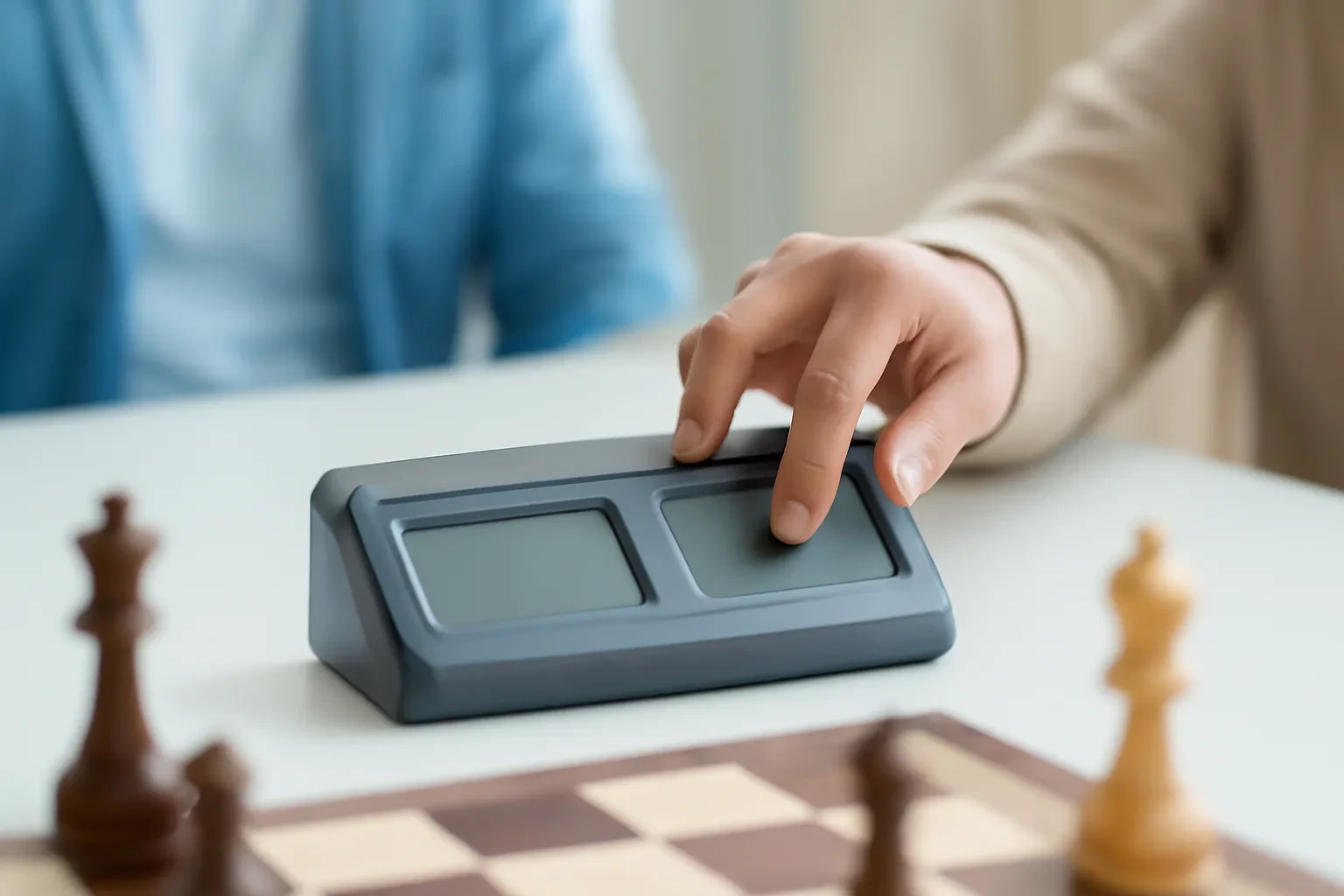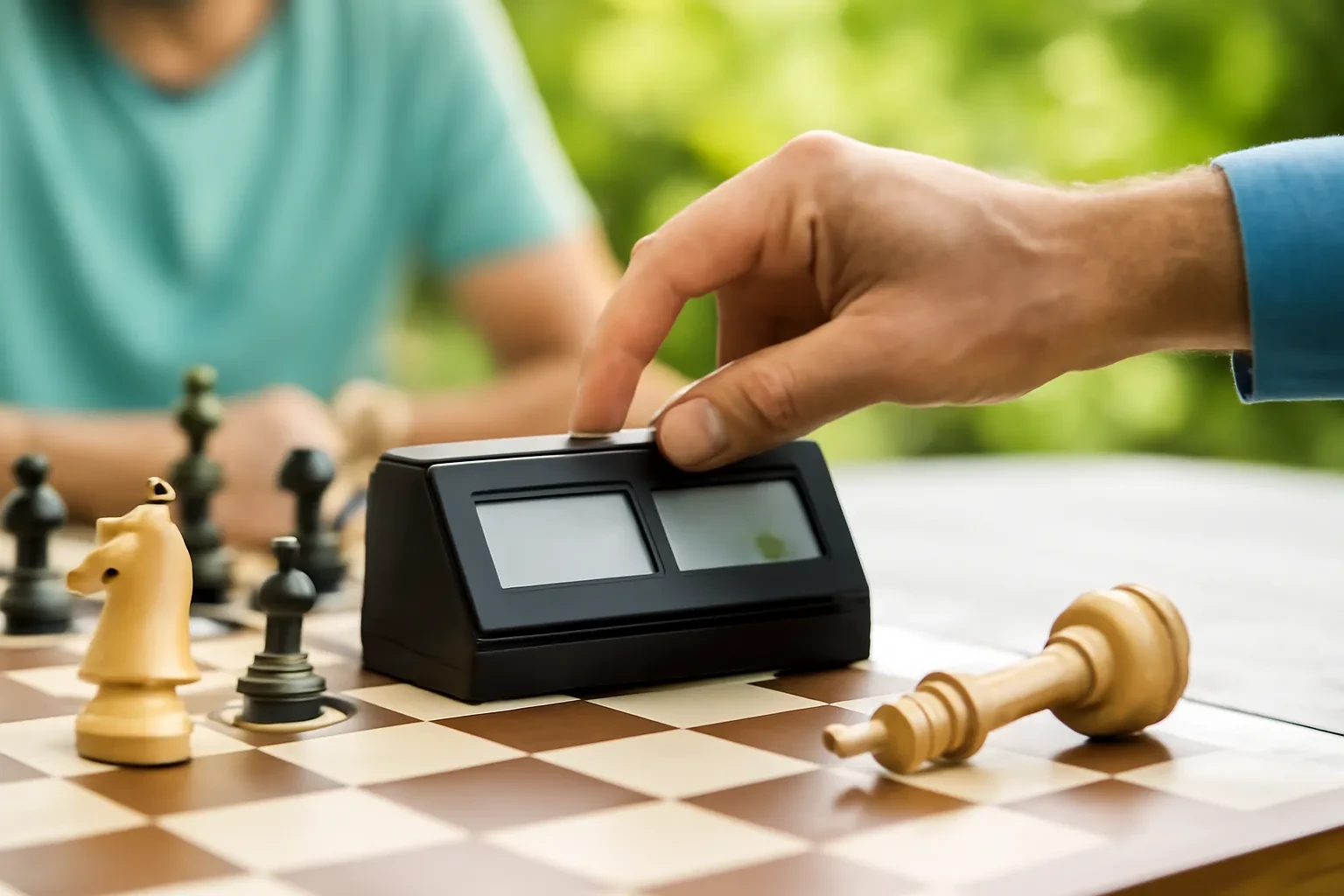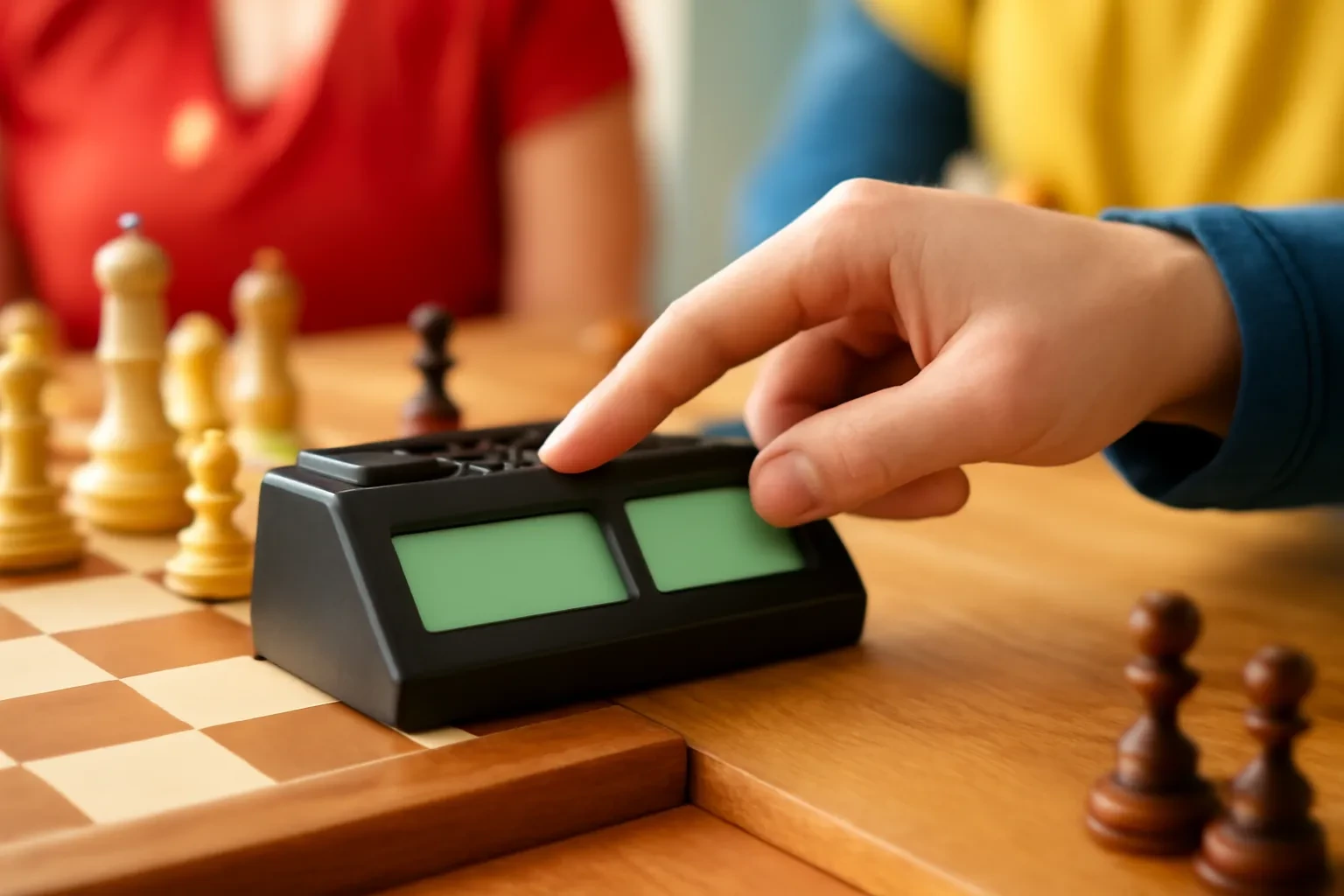
Look at almost any online chess lobby and you'll see time controls written like 3+2, 10+5, or 15+10. The first number is easy: minutes per player. The second is the one that confuses newcomers — and the one that changes how the game feels more than almost anything else. That second number is the increment.
What increment means
Increment is the number of seconds added to your clock after each move you make.
In a 3+2 game:
- Each player starts with 3 minutes.
- Every time you complete a move, 2 seconds are added to your clock.
So if you take 1 second to make a move, you actually gain 1 second. If you take 5 seconds, you lose 3 net. Over a 40-move game, increment adds 80 seconds per player — a big deal in a 3-minute game.
This system is often called Fischer increment or a Fischer clock, after Bobby Fischer, who proposed and patented the idea. It's now the standard way time is added in both online and over-the-board chess.
Why increment exists
Without increment, a game can be decided by the clock rather than the board. Picture a winning endgame where you have 4 seconds left and your opponent has 30: you may know exactly how to win and still lose on time simply because you can't physically move fast enough.
Increment fixes that. As long as you move faster than the increment, you can never run out of time. You might have very little, but you always have enough to make a move. It rewards playing well over clicking fast, especially in the endgame.
Common formats
| Format | Typical use |
|---|---|
| 1+0, 1+1, 2+1 | Bullet |
| 3+0, 3+2, 5+3 | Blitz |
| 10+5, 15+10 | Rapid |
| Longer games with 30 seconds per move | Classical over-the-board tournaments |
Formats without increment ("+0") still exist and are popular for bullet, but they produce more flagging (losing on time) and more frantic endgames. For an overview of the categories, see bullet, blitz, rapid and classical.
Increment versus delay
Some clocks, especially in the United States, use delay instead of increment. The difference is subtle but real:
- Increment: time is added after your move. You can bank extra time by moving quickly.
- Simple delay (often called US delay): the clock waits a few seconds before starting to count down each move. If you move within the delay, you lose nothing — but you never gain time.
- Bronstein delay: after your move, you get back the time you used, up to the delay amount. Like simple delay, you can't bank extra time.
With delay, your clock can only go down or stay the same. With increment, it can go up. Most online platforms use increment, which is why "3+2" is so common.
How to play well with increment
Don't panic at low time
With increment, 10 seconds is not a death sentence. If the increment is 2 seconds and you move in 1, you're gaining time. Many players lose games in time trouble not because the clock beat them, but because they panicked and blundered.
Use the endgame to rebuild your clock
In simple endgames — king walks, pawn pushes, rook checks from a distance — you can often make safe moves quickly and bank increment. Then spend that time on the one critical decision that decides the game.
Premove carefully
Online, premoving (entering your next move before your opponent moves) saves time and earns increment instantly. It's useful in forced sequences like recaptures. It's dangerous anywhere else — premoves don't look at what your opponent actually played.
Budget with increment in mind
A useful rule of thumb: treat the increment as your baseline time per move, and the starting minutes as a reserve for the difficult moments. In 3+2, that means spending about 2 seconds on routine moves and dipping into your 3 minutes for the few moves that really need thought. Our time management tips cover budgeting in more depth.
Increment on our play page
The board on our play page offers three timed formats against the computer — 3+2, 5+3 and 10+5 — as well as untimed play. The increment is added after every move, just as online. It's a good place to practice clock handling without the pressure of a rating.
If you're new to timed chess, start with 10+5. It's fast enough to feel like a real game, but slow enough to build good habits — checking threats, counting captures — before you speed up.
Common mistakes with increment
Ignoring the increment entirely. Players used to "+0" chess often play as if the increment doesn't exist and spend their time evenly. Take advantage of it: move quickly in simple positions to bank time.
Relying on it too much. Increment prevents flagging, but it doesn't give you time to think deeply. If you reach move 25 with 15 seconds in a 3+2 game, you'll be playing on 2 seconds per move for the rest of the game. That's survivable, not comfortable.
Premoving in unclear positions. It saves a second and loses a queen.
Increment in over-the-board tournaments
Increment isn't just an online feature. Most modern tournaments use digital clocks with increment from move one — a common classical format gives each player 90 minutes plus 30 seconds per move, sometimes with extra time added after move 40. One practical consequence: in many events with at least 30 seconds of increment, players must keep writing down their moves for the whole game, because they always have time to do so. Tournament rules vary, so check the event regulations or ask the arbiter.
Digital clocks also make increment invisible in a helpful way: you don't need to track it yourself. Just remember that every move you make adds the increment, and plan your time with that in mind.
Frequently asked questions
What does 3+2 mean in chess?
Each player starts with three minutes, and two seconds are added to their clock after every move they make.
Can I run out of time with increment?
Yes, if your clock reaches zero before you move. But if you consistently move faster than the increment, your clock will never run out.
What's the difference between increment and delay?
Increment adds time after each move, so you can build up extra time. Delay only pauses the clock briefly before it starts counting, so you can never gain time.
Who invented increment?
The increment clock was proposed and patented by former world champion Bobby Fischer, which is why it's often called Fischer increment.
Which time control is best for improving?
Rapid formats with increment, such as 10+5 or 15+10, give you enough time to think and build good habits. Faster formats are fun but reward reflexes more than understanding.